Bodyweight Training Benefits and Online Fitness Courses

A fitness plan is easier to follow when the first step is simple. No rack to set up. No dumbbells to buy. No waiting for a machine. Just a clear space, a screen, and a session that meets the body where it is today.
That is why bodyweight training fits so well with online fitness courses. It removes the friction that stops many people from starting, while still giving enough challenge to build strength, control, stamina, and confidence. For online courses at Gilbert Taylor Fitness, the value is clear: the training can travel with the person taking part, whether they are at home, away for work, in a garden, or fitting a short workout into a busy day.
Bodyweight training is not a “beginner only” option. Press-ups, squats, lunges, planks, mountain climbers, bridges, bear crawls, and controlled mobility work can all be made easier or harder through tempo, range of motion, rest time, and exercise selection. That makes it a strong foundation for structured online coaching.
This article is for information only. Anyone with a medical condition, pain, injury, or concern about exercise should seek advice from a qualified health professional before starting a new programme.

Bodyweight training makes exercise easier to start
The biggest benefit of no-equipment training is access. A course that depends on kit can create delays before the first workout even begins. People may need to buy weights, find storage, check what resistance band to use, or work out whether a bench is suitable. That can turn a good intention into another task.
Bodyweight training removes most of that.
A well-planned online course can begin with movements that use the body’s own resistance. This means the first session can happen today, not after a delivery arrives. It also suits people who do not want their home to look like a mini gym.
The setup is simple:
A small area of clear floor
Comfortable clothing
A stable internet connection
Enough space to move safely
A way to watch or listen to the session
That simplicity matters because consistency often comes from removing excuses. If a workout needs a spare hour, special equipment, and a perfect environment, it becomes easier to skip. If it needs 20 to 40 minutes and a quiet corner, it becomes much more realistic.
Bodyweight Training Benefits for Online Fitness Courses with No Equipment Needed are especially strong for people who train around work, family, travel, or a changing weekly routine. The workout does not depend on where someone is. It depends on whether they can follow clear coaching and move with control.
For a service like Gilbert Taylor Fitness, this makes online learning more practical. Exercise demonstrations can focus on posture, pace, breathing, and body position rather than equipment setup. That creates a cleaner learning experience and helps people pay attention to how they move.
No-equipment workouts still build strength
A common myth is that strength training must involve weights. Weights are useful, but they are not the only way to challenge the muscles. Bodyweight training can build strength through smart exercise progressions.
A press-up, for example, is not just one exercise. It can be scaled in many ways:
Easier options | Harder options |
Wall press-up | Slow tempo press-up |
Incline press-up | Pause press-up |
Knee press-up | Close-grip press-up |
Controlled partial press-up | Feet-elevated press-up |
The same idea applies to squats, lunges, hip bridges, planks, and core drills. A beginner may start with a box squat style movement to learn control. A more experienced person may move to split squats, squat pulses, jump squats, or slower repetitions.
Strength improves when muscles face a challenge they can recover from. That challenge can come from load, but it can also come from:
Slower lowering phases
Longer holds
More demanding positions
Extra repetitions
Shorter rest periods
Better control through a larger range of motion
A good online course can guide these changes step by step. That matters because random hard workouts are not the same as training. Training should have direction. It should explain what to do, how to perform it, and when to progress.
With bodyweight exercises, the body becomes the main feedback tool. If the hips twist during a plank, the person can learn to brace better. If the knees collapse during a squat, they can slow down and improve alignment. This focus on movement quality helps build a useful base before any equipment is added later.
Online coaching at Gilbert Taylor Fitness makes training safer and clearer
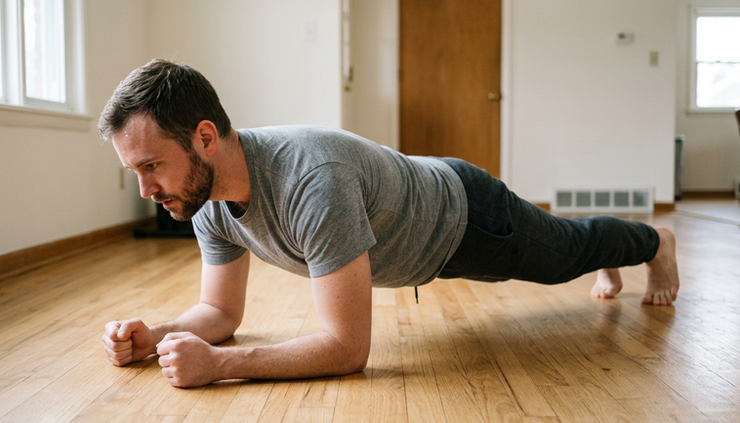
Bodyweight exercises may look simple, but simple does not always mean easy. A squat can be rushed. A lunge can feel awkward. A plank can turn into lower back strain if the person does not know how to brace.
That is where online course structure matters.
A good online course can break movements down into clear stages. Instead of asking someone to “just do burpees”, it can teach landing position, core control, pacing, and lower-impact options. Instead of pushing people to copy the fastest person on screen, it can encourage the right version for their current level.
This is one of the main benefits of online learning. The person taking the course can pause, replay, and practise. They can repeat a lesson until the movement feels more natural. They do not have to keep up with a crowded class or feel exposed while learning.
Clear coaching also helps people understand the purpose of each session. A workout may focus on:
Strength Controlled reps, slower tempo, and good body position
Mobility Better range of motion, joint control, and easier movement
Conditioning Higher heart rate, shorter rests, and steady effort
Core stability Bracing, balance, and control through the trunk
Recovery Gentle movement, breathing, and lower intensity work
This clarity helps reduce guesswork. It also gives each session a reason. When someone knows why they are doing a movement, they are more likely to perform it well and stay engaged.
For Gilbert Taylor Fitness online courses, the no-equipment approach can also make video coaching cleaner. The camera can focus on the body, not on adjusting kit. Viewers can see joint angles, posture, speed, and range of motion. These details matter, especially for people building confidence from home.
Bodyweight training supports real-life fitness
Fitness should make daily movement feel better. Carrying shopping, climbing stairs, getting up from the floor, walking uphill, playing sport, or staying active during a busy week all require strength, balance, and control.
Bodyweight training supports these skills because many exercises use natural movement patterns.
A squat trains the ability to bend at the knees and hips. A lunge builds single-leg control. A plank teaches the trunk to stay stable. A bridge helps strengthen the hips. A bear crawl links shoulders, core, and hips in one movement.
These are not isolated gym tricks. They are movement skills that carry into life.
Another benefit is balance. Machines often guide the body through a fixed path. Bodyweight exercises ask the person to stabilise themselves. That can improve body awareness, coordination, and control. It also helps reveal differences between sides of the body. For instance, one leg may feel less stable during a split squat, or one shoulder may fatigue faster during a high plank.
Bodyweight training can also be gentle when needed. Not every session has to be intense. A well-designed course can include slower strength work, mobility flows, lower-impact cardio, and recovery sessions. This makes it easier to train across the week without feeling beaten up after every workout.
That variety is important. Progress does not only come from pushing hard. It also comes from practising well, recovering properly, and building habits that last.

No equipment means fewer barriers and better consistency
The best workout plan is the one that gets done often enough to matter. No-equipment training helps because it lowers the number of things that can get in the way.
There is no gym commute. No kit list. No need to reserve space. No worry about whether the right weights are available. This makes bodyweight training especially useful for online learners who want structure without added complexity.
It also saves space. Many people train in bedrooms, living rooms, kitchens, or shared homes. A course built around bodyweight exercises respects that reality. It does not assume access to a garage gym or a large workout area.
Travel is another clear benefit. A no-equipment session can be done in a hotel room, holiday rental, or quiet outdoor space. The routine stays familiar, which helps people return to training even when normal life changes. That is a major advantage for long-term consistency.
Bodyweight workouts can also be easier to fit into short gaps. A full session may be planned, but a shorter version can still have value. For example:
10 minutes | 20 minutes | 40 minutes |
Mobility flow and core work | Full-body circuit | Strength, conditioning, and cool-down |
Good for busy days | Good for regular training | Good for deeper practice |
Keeps the habit alive | Builds fitness steadily | Allows more variety and progress |
This flexibility does not mean the training is casual. It means the course can support real life. Some days allow a full workout. Other days call for a shorter session. Both can help maintain momentum.
The key is to avoid the all-or-nothing trap. A short workout done well beats a perfect workout that never happens.
Progress comes from structure, not equipment
Equipment can be useful, but it does not create progress on its own. Progress comes from the right plan, repeated with care.
In bodyweight training, progress can be measured in several ways:
More controlled repetitions
Deeper range of motion
Better posture
Longer holds
Shorter rests with good form
Improved balance
Lower effort for the same workout
More confidence with harder variations
This is where online courses can add real value. Without a plan, it is easy to repeat the same exercises without knowing what should change. A course can show when to stay with a movement and when to move on. It can also offer different versions for different ability levels.
For example, a lower-body session might include squats, reverse lunges, glute bridges, and calf raises. Over time, the training can progress by slowing the tempo, adding pauses, changing to single-leg patterns, or increasing the total work. None of that requires equipment. It requires coaching and consistency.
The same is true for conditioning. Instead of jumping straight into hard impact movements, an online course can build intensity gradually. Marches, step-backs, squat reaches, mountain climber variations, and low-impact intervals can all raise the heart rate. Stronger participants can use faster transitions or more advanced variations.
Progress should still feel personal. A beginner and an experienced exerciser can follow the same session if the course offers clear options. The beginner may use shorter work periods and easier variations. The experienced person may use slower tempo, deeper range, or less rest.
That is the strength of bodyweight programming. The exercise can be simple, while the coaching makes it specific.

The best online fitness courses are easy to access, clear to follow, and structured enough to create progress. Bodyweight training supports all three.
It keeps the starting point simple. It allows people to train wherever they are. It teaches useful movement skills. It builds strength, stamina, mobility, and confidence without needing to invest in equipment. It also makes it easier to stay consistent, which is where real change begins.
For Gilbert Taylor Fitness, no-equipment training is especially relevant because it fits the way many people now want to exercise. They want good coaching, but they also want flexibility. They want sessions that work at home. They want fitness that fits into the week rather than taking over the week.
A strong bodyweight programme should feel clear, progressive, and achievable. It should teach the basics well, offer suitable options, and help people improve at a steady pace. When those pieces are in place, no-equipment training becomes much more than a convenient backup plan.
It becomes a practical way to build a fitter, stronger, more capable body, one session at a time.
To view our online courses visit www.gilberttaylorfitness.com/challenges


Comments